

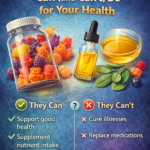
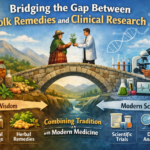
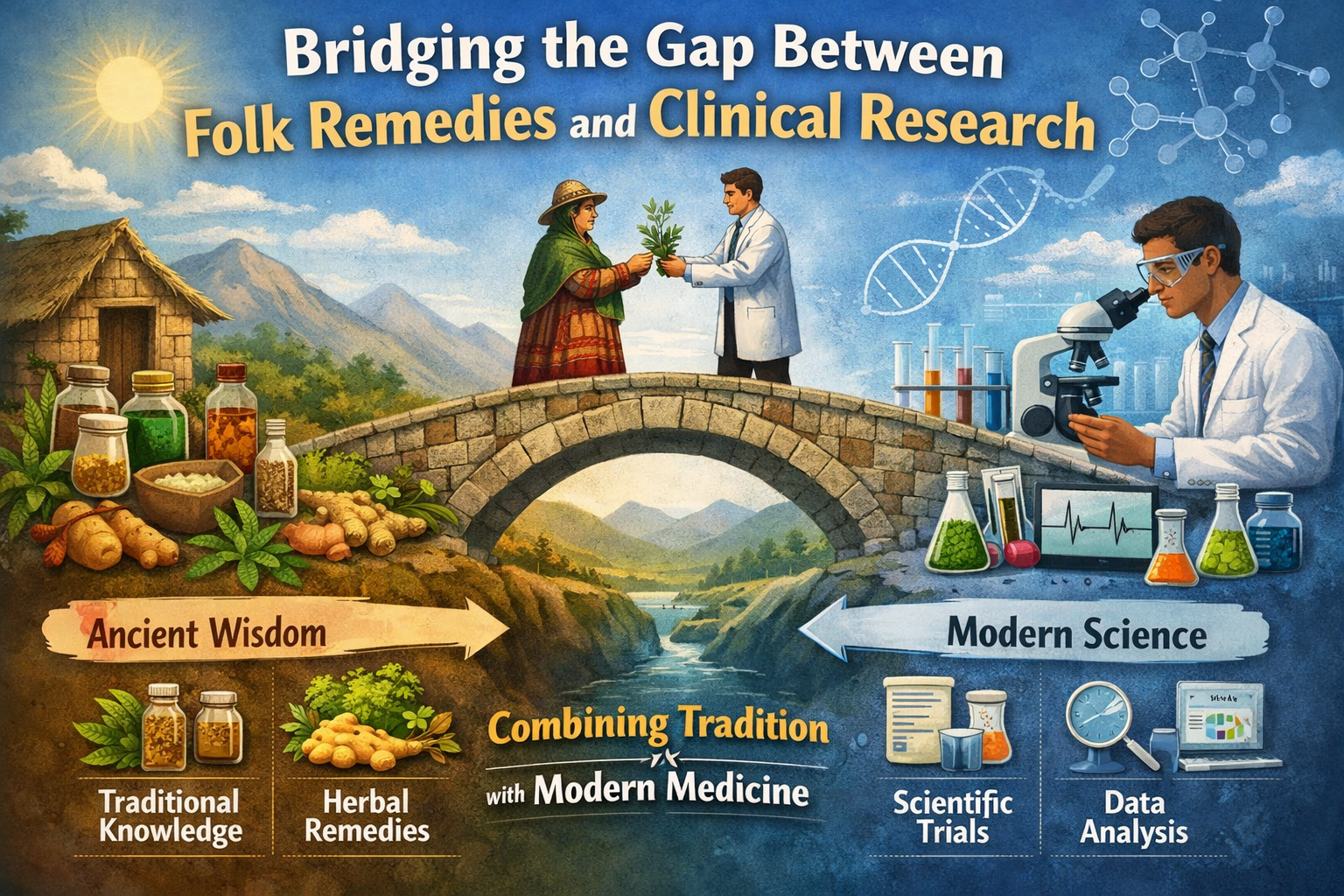

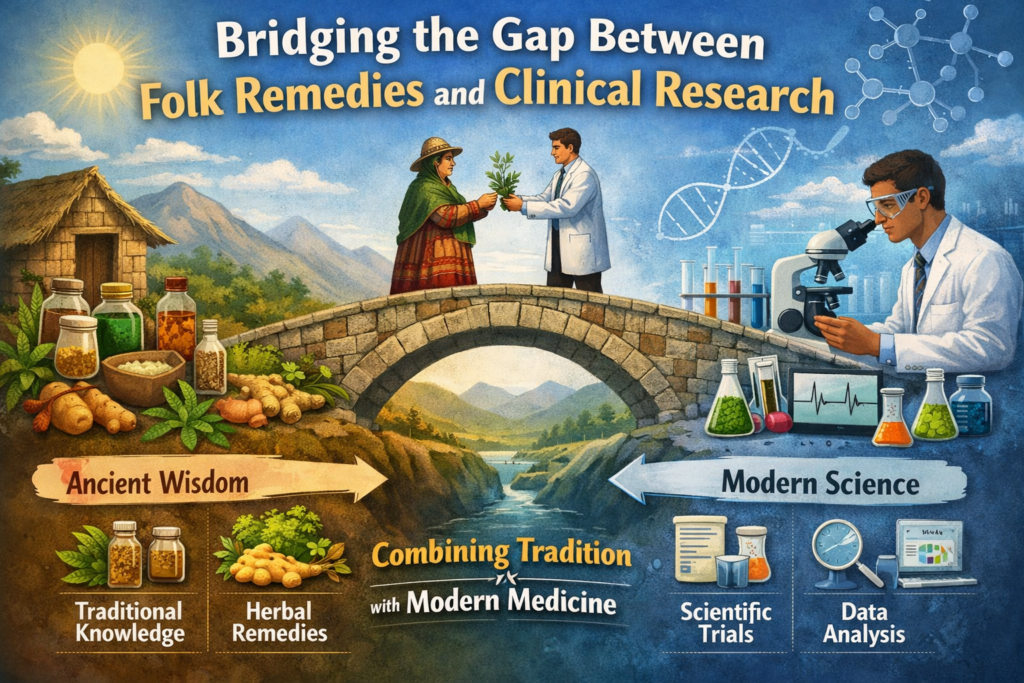
The relationship between traditional remedies and modern scientific medicine is often framed as a conflict—ancient wisdom versus hard facts. However, a more accurate and productive view is that of a convergence. As the global healthcare landscape evolves, there is a growing interest in integrative approaches that combine the best of both worlds. This blog post delves into the nuances of traditional and scientific medicine, exploring where they diverge, where they align, and how rigorous research is building bridges between the two.
Understanding the Fundamental Philosophies
Traditional medicine encompasses a wide range of practices, including Traditional Chinese Medicine (TCM), Ayurveda, and various Indigenous healing systems. These systems are typically holistic, focusing on the balance of the body, mind, and spirit. They are often based on centuries of observation and passed down through generations. For example, the use of Cuscutae Semen and Rehmanniae Radix Preparata in East Asian medicine for age-related auditory disorders is rooted in the concept of nourishing the kidney, which is traditionally believed to be associated with hearing .
Scientific medicine, on the other hand, is based on the principles of evidence-based practice. It relies on the scientific method—observation, hypothesis, experimentation, and conclusion—to determine the safety and efficacy of a treatment. The gold standard for this type of evidence is the randomized controlled trial (RCT) . Unlike traditional wisdom, which is accepted based on historical use, scientific facts are constantly tested, challenged, and updated as new data emerges .
The Scientific Verdict on Traditional Practices
The core of the debate lies in evidence. Many traditional remedies are now being put under the scientific microscope, and the results are illuminating. It is not a simple case of “proven” or “unproven”; rather, it is a spectrum of evidence.
When Science Confirms Efficacy
In several cases, rigorous scientific investigation has provided strong support for traditional practices.
- Acupuncture for Cognitive Impairment: A 2026 systematic review and meta-analysis of randomized controlled trials assessed the efficacy of acupuncture for cognitive impairment related to cerebral small vessel disease. The analysis, which included 13 RCTs with 916 participants, found that acupuncture significantly improved cognitive function and daily living abilities compared to control groups. The evidence was robust enough to suggest it as a safe and effective therapy, though the authors called for more standardized protocols and long-term studies .
- Honey for Wound Healing and Cough: The evidence for honey is so strong that it has been graded using the GRADE approach (Grading of Recommendations, Assessment, Development, and Evaluation). High-quality evidence shows that honey dressings heal partial-thickness burns more quickly than conventional dressings. For acute cough in children, honey has been shown to be more effective than no treatment and placebo, and comparable to common over-the-counter medications like dextromethorphan .
- An Ayurvedic Approach to Acne: A 2025 randomized, double-blind, placebo-controlled study evaluated “Kūlaris,” a herbal formulation containing Commiphora wightii (guggul) and Amorphophallus konjac extracts, for mild to severe acne. After 12 weeks, the treatment group showed a statistically significant reduction in both inflammatory and non-inflammatory acne lesions and an improvement in quality of life compared to the placebo, with no reported adverse effects .
The Critical Role of “Evidence Quality”
While some studies are promising, it is crucial to look at the quality of the evidence. Not all scientific studies are created equal, and a single positive result does not transform a traditional remedy into a scientific fact.
A summary of various systematic reviews highlights this perfectly. For example, while the evidence for honey on burns is high quality, the evidence for aromatherapy in managing postoperative nausea is often low or very low quality . Similarly, the GRADE assessment for the acupuncture study mentioned earlier ranged from moderate to very low across different outcomes, indicating that while the therapy shows promise, confidence in the estimated effects is not uniformly high .
The table below, adapted from a comprehensive review, illustrates how the same traditional agent can have different levels of evidence for different applications .
| Traditional Remedy | Application | Scientific Finding (vs. Comparator) | Evidence Quality (GRADE) |
|---|---|---|---|
| Honey | Burn Wounds | Heals partial thickness burns more quickly | High |
| Honey | Acute Cough in Children | Reduces coughing frequency vs. no treatment | Moderate |
| Honey | Acute Cough in Children | Comparable to dextromethorphan | Moderate |
| Aromatherapy | Post-op Nausea | Reduces need for rescue antiemetics vs. placebo | Low |
| Aromatherapy | Post-op Nausea | No difference in severity of nausea vs. placebo | Low |
| Hypnotherapy | Smoking Cessation | Benefit at 12 months vs. no treatment | Not assessed |
Where Traditional Wisdom Meets Modern Labs: A Case Study in Synergy
One of the most exciting developments is the use of modern science to explain how traditional remedies work. This is not about validation, but about discovery and synergy. A perfect example of this is the study of Arnebia euchroma, a plant native to Iran used in Persian traditional medicine for wound healing. A recent clinical trial compared an ointment made from this plant to standard silver nanoparticle dressings for treating pressure ulcers .
The results were fascinating. Both treatments were effective in healing the wounds, with no statistical difference in ulcer size reduction. However, patients receiving the herbal ointment experienced significantly less pain during and after dressing changes . This finding bridges the gap by showing that a traditional plant-based remedy can perform on par with a modern medical standard while offering an additional benefit (pain relief) that modern science is only beginning to understand through the analysis of the plant’s bioactive compounds, such as shikonin and alkannins .
This synergy is also evident in other research:
- Hearing Loss: Preclinical studies have shown that the traditional East Asian combination of Cuscutae Semen and Rehmanniae Radix Preparata can protect against age-related hearing loss in mice by restoring specific GABAergic signaling in the brain, providing a modern neurochemical basis for a centuries-old practice .
- Cardiovascular Health: Registered clinical trials are actively investigating the effects of complex Ayurvedic herbal compounds on vascular function in high-risk populations, comparing them against both placebos and standard vitamin supplements .
Challenges on the Path to Integration
Despite the promising research, the path to fully integrating traditional and scientific medicine is fraught with challenges. It is essential to be aware of these limitations to avoid overgeneralizing positive results.
- Quality and Consistency: Traditional remedies are not standardized. The potency of a plant-based medicine can vary based on where it was grown, when it was harvested, and how it was processed. This makes it difficult to replicate study results and create reliable dosing guidelines .
- Methodological Weaknesses: A significant portion of research on traditional medicine still suffers from poor study design. A 2023 review of RCTs on Chinese patent medicines found that while the number of publications is increasing, the implementation of allocation concealment and blinding remains insufficient. Many studies are small and conducted at a single center, which limits the generalizability of their findings .
- Toxicity and Interactions: The assumption that “natural” equals “safe” is a dangerous fallacy. Herbal medicines can be just as potent and potentially harmful as synthetic drugs. They can have toxic effects on their own or interact dangerously with prescription medications. This is a critical area where scientific scrutiny is indispensable .
- The “Very Low” Evidence Barrier: For every well-conducted study showing a positive effect, there are many more where the evidence is simply too weak to draw conclusions. For example, while some preclinical research on Australian Indigenous medicines shows immense potential, a lack of rigorous clinical trials prevents their translation into widespread clinical use . Similarly, systematic reviews on ozone therapy for diabetic foot ulcers found no difference compared to standard care .
The Path Forward: Integration, Not Rejection
The future of healthcare does not lie in choosing between traditional remedies and scientific facts, but in building a respectful, rigorous framework for integrative medicine. This involves:
- Rigorous Testing: Submitting traditional remedies to the highest standards of scientific scrutiny, including well-designed RCTs and systematic reviews.
- Dismantling the “Natural = Safe” Myth: Educating the public that traditional remedies require the same caution as pharmaceuticals, including potential side effects and interactions.
- Standardization and Regulation: Developing methods to standardize herbal products to ensure quality, purity, and consistent dosing for both research and clinical use.
- Learning from Tradition: Using traditional knowledge as a powerful tool for drug discovery. The bioactive compounds in plants used for centuries can serve as a starting point for developing new, effective, and safe medications .
Conclusion
The conversation between traditional remedies and scientific facts is no longer a monologue but a dynamic dialogue. We are moving past the simplistic debate of “ancient wisdom vs. modern science” towards a more nuanced understanding. Science is proving that many traditional practices, from acupuncture to specific herbal compounds, have real, measurable effects. However, it is also revealing that not all traditions hold up under scrutiny, and that “natural” remedies carry their own risks. By applying the rigor of science to the wisdom of tradition, we can create a future of medicine that is both powerfully effective and deeply holistic.