Introduction: The Elephant in the Room
Aging is a privilege denied to many, yet it comes with a set of challenges that our culture often prefers to whisper about rather than discuss openly. “It’s just part of getting old,” is the common refrain used to dismiss a host of physical and cognitive changes. But when it comes to age-related performance issues—whether physical stamina, sexual health, or cognitive sharpness—dismissal is not the same as acceptance, and it is certainly not the same as treatment.
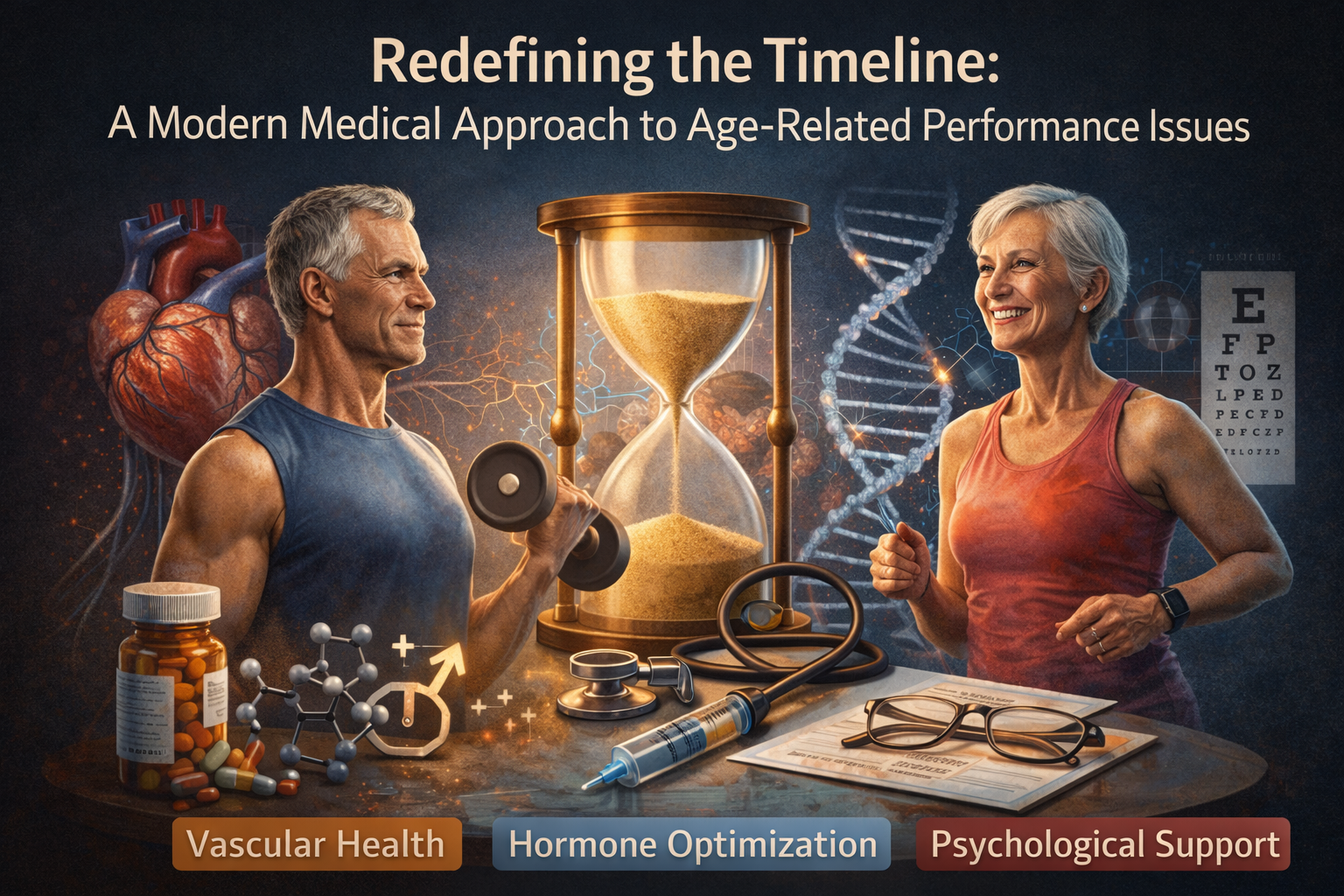
The modern medical landscape has shifted. We no longer view age-related decline as a steep, unchangeable slope, but rather as a series of manageable variables. Today, we are exploring the multifaceted nature of performance issues as we age, separating the inevitable from the treatable, and outlining a roadmap for maintaining vitality well into your golden years.
The Three Pillars of Performance
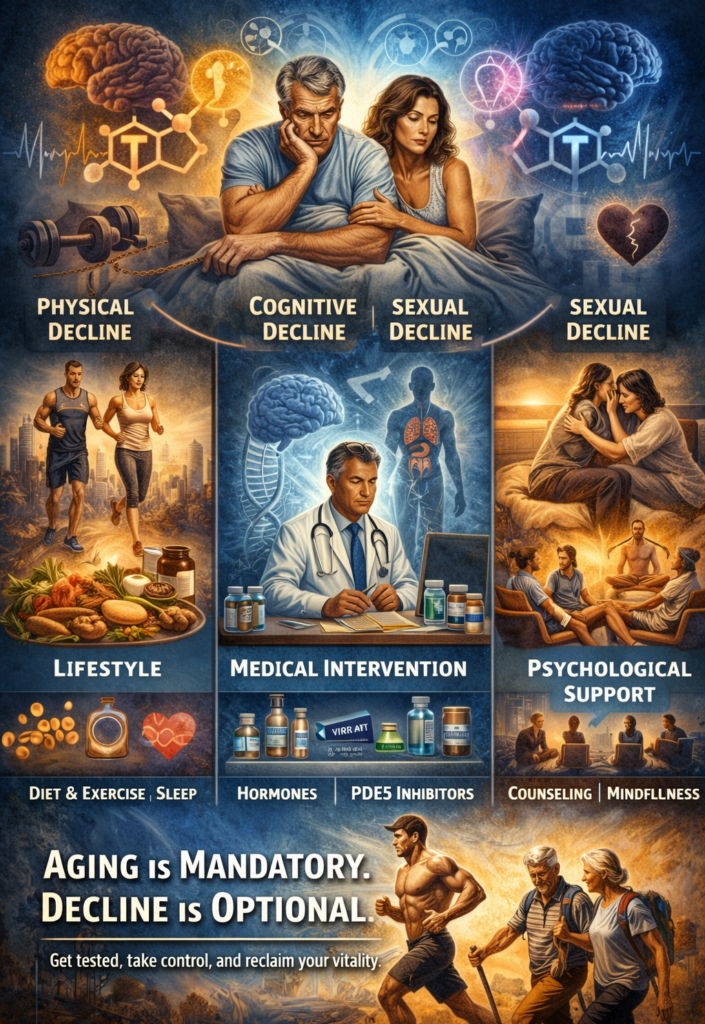
When we discuss “performance issues” in the context of aging, we must broaden the lens. Performance is not solely a bedroom metric; it is a measure of how effectively we engage with life itself. Age-related decline typically attacks three key areas simultaneously:
- Physical Performance: A decrease in stamina, muscle recovery, and cardiovascular endurance.
- Cognitive Performance: The dreaded “brain fog,” slower recall, and difficulty concentrating.
- Sexual Performance: Erectile dysfunction in men, vaginal atrophy/lowered libido in women, and general loss of intimacy.
The common thread linking all three is vascular health and hormonal balance.
The Vascular Connection: Blood Flow is Life Flow
At the core of every performance metric is the circulatory system. Whether you are trying to run a mile, solve a complex problem, or achieve physical intimacy, you require robust blood flow.
As we age, our blood vessels naturally lose some of their elasticity—a process accelerated by hypertension, high cholesterol, and sedentary living. This endothelial dysfunction (stiffening of the blood vessel walls) means that oxygen and nutrients cannot be delivered to muscles or the brain as efficiently.
The good news: The vascular system is incredibly responsive to lifestyle intervention. It is not a one-way street of decline.
The Hormonal Shift: The Silent Saboteur
While vascular health is the hardware, hormones are the software running the system.
- In Men: Testosterone begins a slow, steady decline around age 30. By age 50, many men experience levels low enough to impact energy, muscle mass, and libido. This is often compounded by rising SHBG (Sex Hormone Binding Globulin), which traps the remaining testosterone, rendering it unusable.
- In Women: The perimenopausal and menopausal transition causes a dramatic drop in estrogen and progesterone. This leads to vaginal dryness, decreased libido, hot flashes that disrupt sleep, and a significant increase in the risk of cognitive decline.
These hormonal shifts do not just affect “performance” in isolation; they affect mood, confidence, and the very desire to engage in physical or social activities.
Breaking the Silence: The Psychological Toll
Perhaps the most damaging aspect of age-related performance issues is the silence surrounding them. A man who develops erectile dysfunction often feels his masculinity is threatened. A woman experiencing a loss of libido may feel she is failing her partner. This leads to a vicious cycle:
- Anxiety: Fear of failure creates performance anxiety.
- Avoidance: The individual avoids the triggering situation (intimacy, social events, exercise).
- Depression: Withdrawal leads to feelings of isolation and worthlessness.
This psychological burden can cause more damage than the original physiological issue.
The Modern Approach: A Diagnostic, Not a Sentence
The era of accepting “I’m just getting old” as a diagnosis is over. Today, a proactive approach involves looking at the data. If you are experiencing a decline in any aspect of performance, consider the following diagnostic steps:
- Comprehensive Blood Work: Do not just check glucose and cholesterol. Request a full hormone panel (total/free testosterone, estrogen, SHBG, cortisol, thyroid panel) and inflammatory markers (CRP).
- Vascular Assessment: Check your blood pressure regularly. If you have risk factors, discuss endothelial function tests with your cardiologist.
- Medication Review: Some of the most common medications for blood pressure (beta-blockers) and depression (SSRIs) have significant side effects related to sexual and physical performance. A medication review with your doctor may reveal alternatives.
The Recovery Protocol: Reclaiming Vitality
Addressing age-related decline requires a three-pronged strategy: Lifestyle, Medical Intervention, and Psychological Support.
1. Lifestyle: The Foundation
- Strength Training: After age 40, we lose 3-8% of muscle mass per decade. Resistance training is the only way to combat this. More muscle equals a higher metabolism and better glucose disposal.
- Dietary Patterns: Consider a Mediterranean-style diet rich in nitrates (leafy greens) which act as natural vasodilators, improving blood flow.
- Sleep Hygiene: Growth hormone and cellular repair happen during deep sleep. Without it, performance plummets.
2. Medical Interventions
- Hormone Replacement Therapy (HRT/TRT): For clinically deficient individuals, bio-identical hormone therapy can be life-changing, restoring energy, bone density, and libido.
- PDE5 Inhibitors: Medications like Viagra and Cialis are not just for erections; they are vasodilators that have shown promise in treating cardiovascular issues and even Alzheimer’s disease by improving blood flow to the brain.
- Peptide Therapy: Emerging treatments like BPC-157 or Thymosin Beta-4 are being studied for their regenerative properties in tissue repair and inflammation reduction.
3. The Mental Game
- Couples Counseling: Often, the physical issue has created emotional distance. A few sessions can reopen communication lines.
- Mindfulness and Stress Reduction: Chronic stress elevates cortisol, which is catabolic (breaks down tissue) and directly antagonistic to sex hormones.
Conclusion: Aging is Mandatory, Decline is Optional
It is vital to distinguish between the passage of time and the disease of decline. Age-related performance issues are not a sign of personal failure; they are a biological signal that something in the complex machinery of the body needs attention.
By adopting a proactive, data-driven approach, you can often slow, halt, or even reverse many aspects of age-related decline. The goal is not to live forever, but to live fully, vibrantly, and performantly for as long as we are here. Do not accept the whisper that you must simply endure it. Speak up, get tested, and take control of your second half.
Disclaimer: This article is for informational purposes only and does not constitute medical advice. Always consult with a qualified healthcare professional for diagnosis and treatment.