
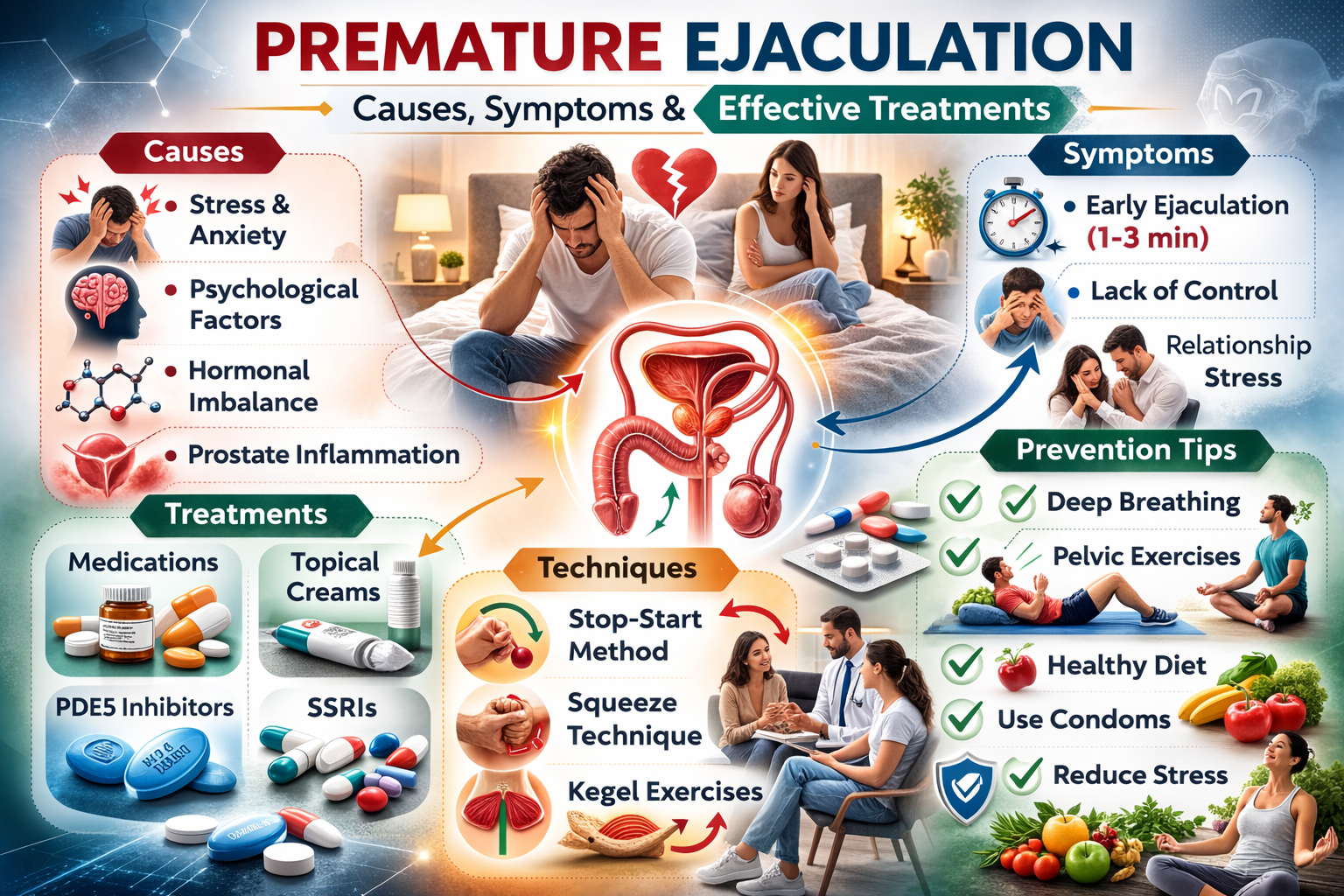
Premature ejaculation (PE) is one of the most common sexual health concerns for men, affecting an estimated 20% to 30% of men worldwide at some point in their lives . While it can be a source of frustration and anxiety, the most important thing to understand is that it is a highly treatable condition. This guide provides a comprehensive, copyright-free overview of premature ejaculation, from understanding its causes to exploring the most effective treatments available today.
What is Premature Ejaculation?
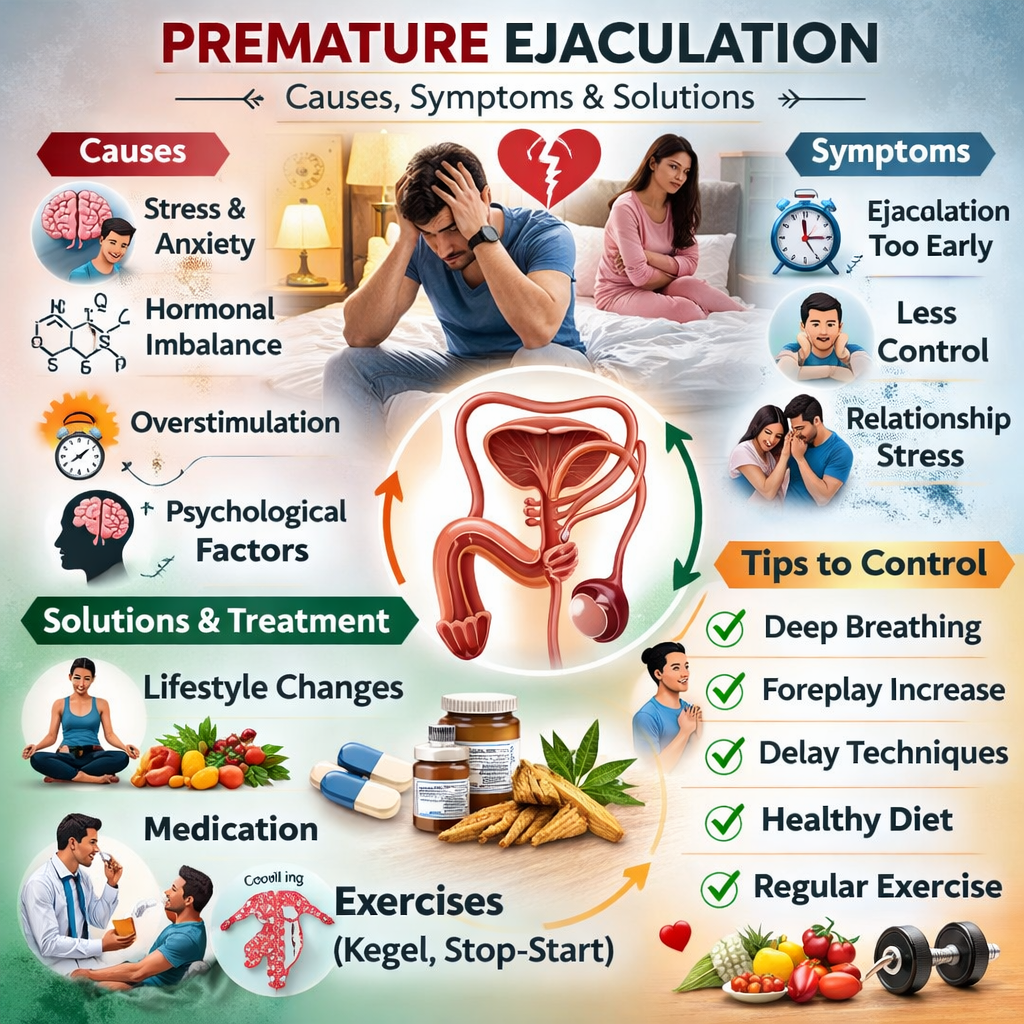
Premature ejaculation occurs when a man ejaculates sooner than he or his partner would like during sexual activity . This can happen before penetration, upon penetration, or shortly after . It’s a common sexual complaint, with some studies suggesting up to 1 in 3 people experience it at some time .
It is important to distinguish between occasional episodes and a persistent condition. Experiencing early ejaculation from time to time is normal and not a cause for concern . A diagnosis of PE is typically considered when the following criteria are met :
- Consistency: You ejaculate within about one to three minutes of penetration always or nearly always.
- Lack of Control: You are unable to delay ejaculation during sex all or nearly all of the time.
- Distress: You experience negative emotions like distress, frustration, or anxiety, which may lead you to avoid sexual intimacy.
Doctors often classify PE into two main types :
- Lifelong (Primary): This refers to PE that has been a problem all or nearly all of the time since a man became sexually active.
- Acquired (Secondary): This type describes PE that develops later in life in a man who previously had no problems with ejaculation.
Common Causes and Risk Factors
The exact cause of premature ejaculation isn’t always clear, but it is understood to be a complex interaction of psychological and biological factors .
Psychological Causes are often the most significant contributors, especially in lifelong PE . These can include :
- Performance anxiety: Worrying about sexual performance can create a cycle of fear and rushing.
- Depression and stress: General emotional or mental strain can limit the ability to relax and focus during sex.
- Relationship problems: Issues like poor communication or unresolved conflicts can spill over into the bedroom.
- Early sexual experiences: Conditioning oneself to ejaculate quickly during early sexual encounters (e.g., to avoid being caught) can create a lasting habit.
Biological and Physical Factors can also play a role :
- Abnormal hormone levels: Irregularities in hormones or brain chemicals like serotonin, which helps control ejaculation, can be a factor. Low serotonin levels, in particular, are linked to faster ejaculation .
- Prostate or urethra inflammation: Infections or swelling in these areas can contribute to PE.
- Thyroid problems: An overactive or underactive thyroid gland can be a rare physical cause .
- Erectile Dysfunction (ED): Men who have difficulty getting or keeping an erection may rush through sex out of fear of losing it, which can lead to or worsen PE .
Effective Treatment Options
The good news is that treatment is successful for the vast majority of men. With practice and the right approach, more than 95% of men can learn to delay ejaculation . Treatment often involves a combination of behavioral techniques, counseling, and medication .
1. Behavioral Techniques
These techniques help men become more aware of their arousal levels and build control. They can be practiced alone or with a partner .
- The Stop-Start Technique: Sexually stimulate the penis until you feel you are about to ejaculate. Stop all stimulation for about 30 seconds until the urge passes. Repeat this pattern three or four times before finally allowing yourself to ejaculate .
- The Squeeze Technique: Similar to the stop-start method, but when you feel close to ejaculation, you or your partner gently squeezes the head of the penis (where the head meets the shaft) for 10 to 20 seconds . This reduces the urge to ejaculate and may cause a slight loss of erection. Wait about 30 seconds before resuming stimulation .
- Pelvic Floor Exercises (Kegels): Strengthening the pelvic floor muscles can give you better control over the ejaculatory reflex. To do this, tighten the muscles you would use to stop the flow of urine, hold for three seconds, and then relax .
- Masturbation Before Sex: Masturbating an hour or two before intercourse can sometimes help you last longer during sex with a partner .
- Use of Condoms: Wearing a condom can reduce penile sensitivity, which may help delay ejaculation . “Climax control” condoms containing a mild numbing agent like benzocaine are also available .
2. Medical Treatments
If behavioral techniques aren’t enough, several medical options can be effective. Always consult a healthcare provider to discuss what’s right for you.
- Topical Anesthetics: These are over-the-counter or prescription creams, gels, or sprays (containing lidocaine or benzocaine) applied to the penis about 10-15 minutes before sex to reduce sensation . They must be washed off before intercourse to prevent transfer to the partner and potential numbness .
- Oral Medications:
- Selective Serotonin Reuptake Inhibitors (SSRIs): These antidepressant medications have a common side effect of delaying ejaculation. Drugs like paroxetine, sertraline, and fluoxetine are often prescribed “off-label” for PE . They work by increasing serotonin levels in the brain . Dapoxetine is a short-acting SSRI specifically developed for on-demand use to treat PE and is approved in many countries outside the U.S. .
- Tramadol: This prescription pain reliever can also delay ejaculation, but it carries a risk of habit-forming and is usually considered when other treatments haven’t worked .
- Phosphodiesterase-5 (PDE5) Inhibitors: Medications like sildenafil (Viagra) or tadalafil (Cialis) are primarily for erectile dysfunction, but they may also help men with PE, especially those who also have trouble keeping an erection .
3. Counseling and Therapy
Speaking with a therapist, psychologist, or sex therapist can be highly beneficial. Psychosexual counseling helps address underlying psychological causes like anxiety, depression, or relationship issues that contribute to PE . It is often most effective when combined with other treatments .
Living with Premature Ejaculation
The impact of PE often extends beyond the physical, affecting emotional well-being and relationships. It can lead to stress, a loss of intimacy, and partners feeling less connected .
Open communication with your partner is a vital step. Talking about the problem can alleviate pressure and help you work together on techniques like the squeeze or stop-start methods . If PE is a persistent concern, do not let embarrassment prevent you from seeking help. A conversation with a healthcare provider can be reassuring and is the first step toward effective treatment.
Remember: Premature ejaculation is a common, treatable medical condition, not a personal failure. With the wide array of effective strategies available, from simple exercises to professional counseling and medication, you can take control and improve your sexual health and satisfaction.