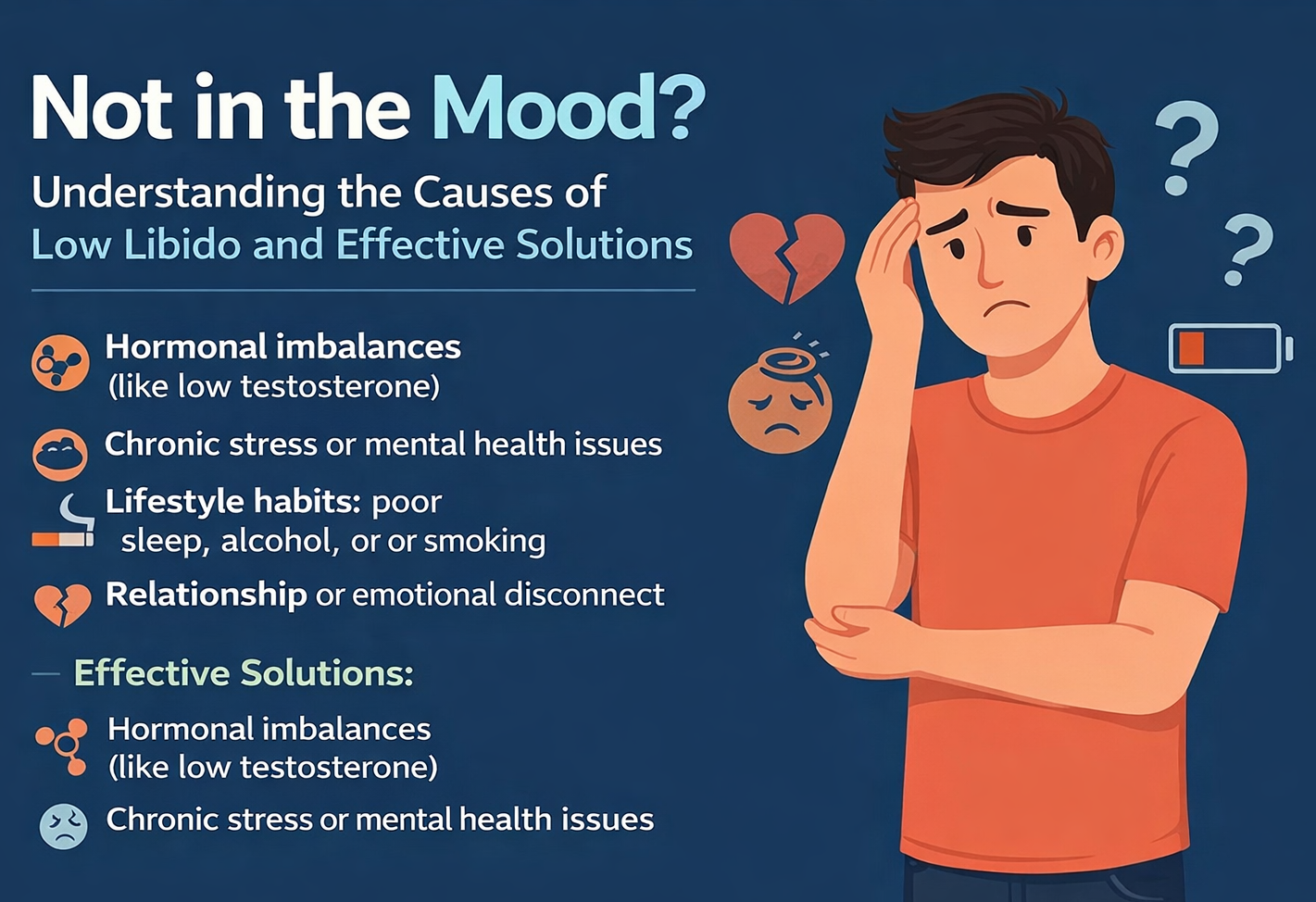
Do you feel like your desire for sex has significantly decreased? If so, you are not alone. It’s a common issue that many people face at some point in their lives. According to the UK’s National Health Service (NHS), about 1 in 5 men and 1 in 3 women (between the ages of 30 and 59) experience low libido . It can be a frustrating and confusing experience, but the good news is that it’s often treatable.
Libido, or your sex drive, isn’t just a simple on/off switch. It’s a complex interplay of your physical health, emotional well-being, beliefs, experiences, lifestyle, and the quality of your current relationship . When one of these areas is out of balance, your desire for sex can take a hit.
Let’s break down the common causes of low libido and, more importantly, explore the solutions to help you reignite that spark.
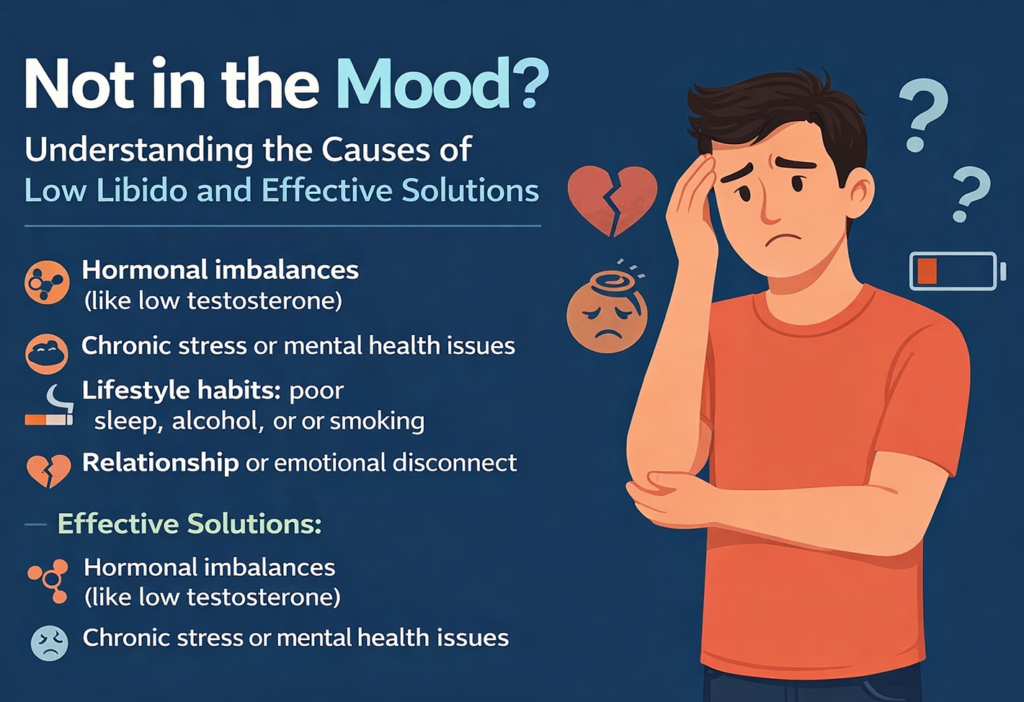
Main Causes of Low Libido
- Hormonal Imbalances: Hormones are the body’s chemical messengers and play a massive role in regulating sex drive.
- Low Testosterone: While known as the male hormone, testosterone is also crucial for women’s libido. Levels naturally decline with age, but a significant drop can drastically reduce desire .
- Hormonal Changes in Women: Fluctuations during the menstrual cycle, pregnancy, and breastfeeding can affect desire. During perimenopause and menopause, declining estrogen levels can lead to vaginal dryness, making sex painful and reducing the desire for it .
- Thyroid Issues: An underactive thyroid (hypothyroidism) can lead to fatigue, weight gain, and depression, all of which can dampen your sex drive .
- Mental Health & Lifestyle Factors:
- Stress and Anxiety: This is one of the biggest libido killers. When you’re stressed, your body produces cortisol, the “stress hormone,” which can suppress sex hormones. Worries about work, money, or family can make it impossible to relax and feel aroused .
- Depression and Medications: Depression itself is linked to a lower libido. Ironically, many antidepressants (especially SSRIs) can further decrease sexual desire and make it difficult to achieve orgasm .
- Poor Sleep and Fatigue: Being exhausted is a major turn-off. Lack of sleep can lower testosterone levels and deplete your energy, leaving nothing left for intimacy .
- Physical Health:
- Underlying Medical Conditions: Chronic illnesses like diabetes, obesity, high blood pressure, and heart disease can affect blood flow, energy levels, and hormone production, all of which are vital for a healthy libido .
- Medications: Besides antidepressants, other drugs like some blood pressure medications and chemotherapy drugs can have side effects that lower sex drive .
- Alcohol and Smoking: While a drink might seem relaxing, excessive alcohol depresses the central nervous system, dampening arousal. Smoking damages blood vessels, restricting blood flow to vital areas .
- Relationship Issues:
- A lack of emotional connection with your partner is a surefire way to kill desire. Unresolved conflicts, poor communication, lack of trust, or simply falling into a boring routine can create emotional distance, making it hard to feel intimate.
Solutions: How to Boost Your Libido
The right solution depends on the underlying cause. Here are some effective strategies you can try:
- 1. Communicate Openly with Your Partner: This is the first and most critical step. Talk to your partner about what you’re experiencing without blame. Reassure them that the issue isn’t about them. Working together as a team to address the problem can strengthen your bond and reduce anxiety around the topic .
- 2. Manage Your Stress Levels: Find healthy ways to decompress. Incorporate stress-reducing activities into your routine like yoga, meditation, deep breathing exercises, or even just a relaxing hobby. Consider a “mental health day” or a weekend getaway with your partner, just the two of you .
- 3. Make Lifestyle Changes:
- Eat a Libido-Boosting Diet: Focus on a balanced diet rich in fruits, vegetables, and whole grains. Foods rich in zinc (like oysters, pumpkin seeds, and nuts) can support healthy testosterone levels. Healthy fats (avocados, olive oil) and antioxidants (berries) improve blood flow.
- Exercise Regularly: Physical activity is a powerful libido booster. It boosts endorphins, improves mood, increases energy, enhances body image, and improves blood circulation—all essential for a healthy sex life. Aim for a mix of cardio and strength training .
- Prioritize Sleep: Aim for 7-9 hours of quality sleep per night. Good sleep is fundamental for hormonal balance and overall energy.
- Limit Alcohol and Quit Smoking: Reducing alcohol intake and quitting smoking can have a significant positive impact on your desire and performance.
- 4. Shake Up Your Routine (With Your Partner): Break out of a sexual rut. Plan regular date nights to reconnect emotionally. Focus on non-sexual physical intimacy like cuddling, massage, and kissing without the pressure of it leading to intercourse. This can rebuild anticipation and desire. Be open to experimenting with new things, whether it’s a new location, time of day, or introducing toys or lubricants to enhance pleasure .
- 5. Seek Professional Medical Help: If lifestyle changes and better communication aren’t enough, don’t hesitate to see a doctor.
- Get a Check-Up: A doctor can run tests to check for underlying medical conditions like hormonal imbalances (testosterone, estrogen, thyroid), diabetes, or vitamin deficiencies.
- Review Medications: If you’re on a medication that you suspect is affecting your libido, talk to your doctor. They may be able to adjust the dosage or switch you to an alternative.
- Consider Therapy: A sex therapist or a couples counselor can be incredibly helpful in addressing psychological or relationship-based causes of low libido. They provide a safe space to explore these issues and develop strategies for improvement.
The Bottom Line:
Low libido is a common and often treatable issue. It’s not a life sentence. By understanding the potential causes—whether they are physical, psychological, or relational—and taking proactive steps, you can reclaim your desire and enjoy a fulfilling sex life. Be patient with yourself and your partner, and don’t be afraid to seek professional help when needed.