Introduction: A Tale of Two Medicines
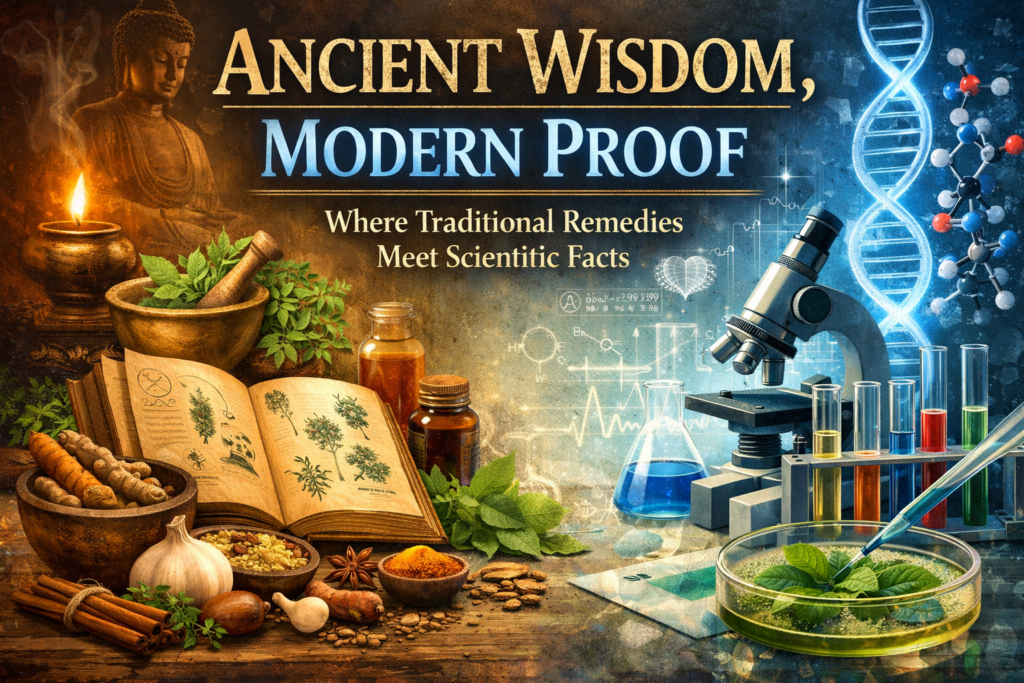
For millennia, human beings relied on the healing power of nature. Before laboratories, clinical trials, and pharmaceutical corporations, there were healers, shamans, and grandmothers who knew which root cured a fever and which bark soothed an aching joint. These traditions—from Traditional Chinese Medicine and Ayurveda to Indigenous healing practices—represent humanity’s original pharmacopoeia.
Today, we live in an age of scientific medicine. We expect double-blind placebo trials, statistically significant p-values, and peer-reviewed publications before we trust a treatment. This has created an apparent divide: the ancient versus the modern, the traditional versus the scientific.
But is this divide real, or is it an illusion? Are traditional remedies merely superstition dressed in cultural prestige, or do they contain genuine therapeutic value that science is only beginning to understand?
This comprehensive exploration examines the intersection of traditional remedies and scientific evidence, revealing a landscape far more nuanced than simple dismissal or blind acceptance.
Part One: The Philosophical Foundations
What Traditional Medicine Offers
Traditional healing systems share common characteristics that distinguish them from modern biomedicine. They are holistic, viewing health as a balance between body, mind, spirit, and environment. They emphasize prevention and individualized treatment rather than one-size-fits-all protocols. Perhaps most importantly, they are built upon centuries of empirical observation—trial and error conducted across generations.
Consider Traditional Chinese Medicine’s concept of “kidney deficiency” contributing to hearing loss. This isn’t anatomical ignorance; it’s a different framework for understanding bodily relationships. When TCM practitioners prescribe Cuscutae Semen and Rehmanniae Radix Preparata for age-related auditory decline, they’re operating within a coherent system developed over two millennia .
What Scientific Medicine Demands
Scientific medicine operates on fundamentally different principles. It demands falsifiability—the ability to prove a treatment wrong. It requires reproducibility—results that can be consistently demonstrated across different settings. Above all, it insists on evidence hierarchies, with the randomized controlled trial (RCT) sitting at the apex of reliability.
This methodological rigor has given us antibiotics, vaccines, and surgical techniques that have transformed human lifespan. But it has also created blind spots. Scientific medicine traditionally struggles with treatments that are difficult to standardize, mechanisms that aren’t easily explained, and outcomes that extend beyond simple biological markers.
Part Two: When Science Confirms Tradition
The most compelling stories emerge when modern research validates ancient practices. These aren’t mere anecdotes; they’re rigorously tested interventions that have survived the crucible of scientific scrutiny.
Honey: From Folk Remedy to Evidence-Based Treatment
Few substances have a longer history of medicinal use than honey. Ancient Egyptians, Assyrians, Chinese, and Greeks all documented its healing properties. For centuries, this was dismissed as folklore.
Today, honey stands as one of the best-researched traditional remedies. Using the GRADE framework—the international standard for evaluating evidence quality—honey has achieved remarkable ratings:
For burn wound management, high-quality evidence demonstrates that honey dressings heal partial-thickness burns more quickly than conventional dressings . The mechanism is now understood: honey’s low pH inhibits bacterial growth, its hydrogen peroxide content provides antiseptic activity, and its osmotic effect draws fluid from wounds, keeping them clean.
For acute cough in children, moderate-quality evidence shows honey reduces coughing frequency compared to no treatment and placebo. Remarkably, it performs comparably to dextromethorphan, a common over-the-counter cough suppressant .
The lesson is clear: a grandmother’s remedy, tested rigorously, proved superior to pharmaceutical alternatives in specific applications.
Acupuncture for Cognitive Decline
Acupuncture has faced particular skepticism in Western medicine. The concept of energy channels (meridians) doesn’t align with anatomical understanding. Yet the clinical evidence continues to accumulate.
A 2026 systematic review and meta-analysis examined acupuncture for cognitive impairment related to cerebral small vessel disease—a condition affecting millions worldwide. The analysis encompassed 13 randomized controlled trials with 916 participants. The findings were striking: acupuncture significantly improved cognitive function and daily living abilities compared to control groups .
The evidence quality ranged from moderate to very low across different outcomes, highlighting the need for more standardized protocols. Nevertheless, the consistency of positive results suggests genuine therapeutic value, potentially mediated through improved cerebral blood flow and neuroplasticity—mechanisms entirely compatible with neuroscience .
Ayurveda Meets Modern Dermatology
Acne vulgaris affects nearly 10% of the global population, with conventional treatments carrying significant side effects. A 2025 randomized, double-blind, placebo-controlled trial evaluated “Kūlaris,” an Ayurvedic formulation containing Commiphora wightii (guggul) and Amorphophallus konjac extracts .
After 12 weeks, the treatment group demonstrated statistically significant reductions in both inflammatory and non-inflammatory acne lesions. Participants reported improved quality of life, and no adverse effects were documented. This wasn’t an observational study or a case series; it was the gold standard of clinical research applied to an ancient formulation.
Part Three: The Spectrum of Evidence
Not all traditional remedies fare equally well under scientific scrutiny. Understanding the evidence spectrum is crucial for separating genuine therapies from well-intentioned but ineffective practices.
The Hierarchy of Certainty
| Evidence Level | Description | Example |
|---|---|---|
| High Quality | Multiple consistent RCTs with low bias risk | Honey for burn wounds |
| Moderate Quality | Consistent results with some limitations | Honey for pediatric cough |
| Low Quality | Limited studies with methodological flaws | Aromatherapy for nausea severity |
| Very Low Quality | Inconsistent results or serious study limitations | Many herbal combinations |
| No Evidence | No rigorous studies conducted | Most traditional practices |
The Aromatherapy Example
Aromatherapy, the use of essential oils for therapeutic purposes, enjoys widespread popularity. Systematic reviews examining its effectiveness for postoperative nausea reveal the typical evidence pattern:
For reducing the need for rescue antiemetics, low-quality evidence suggested benefit compared to placebo. However, for reducing nausea severity itself, low-quality evidence showed no difference from placebo .
This isn’t a dismissal of aromatherapy; it’s an honest assessment of where the evidence stands. The therapy may work, but current research is insufficient for certainty. More rigorous studies could shift these ratings upward—or downward.
Part Four: The Scientific Explanation Gap
One of the most exciting developments in integrative medicine is the use of modern science to explain how traditional remedies work. This isn’t about validation; it’s about translation.
Arnebia euchroma: Persian Wisdom Validated
Iranian traditional medicine has long used Arnebia euchroma, a flowering plant containing shikonin and alkannin derivatives, for wound healing. A recent clinical trial compared an ointment derived from this plant to standard silver nanoparticle dressings for pressure ulcers .
The results were remarkable on two levels. First, both treatments proved equally effective in reducing ulcer size—the herbal preparation matched a modern medical standard. Second, patients receiving the herbal ointment reported significantly less pain during and after dressing changes.
The plant’s bioactive compounds, now identified and characterized, demonstrate anti-inflammatory, antimicrobial, and tissue-regenerating properties. The traditional use wasn’t magic; it was applied pharmacology without the equipment to identify the active molecules.
Hearing Loss and Neurochemistry
The TCM combination of Cuscutae Semen and Rehmanniae Radix Preparata for age-related hearing loss has been used for centuries based on the “kidney governs hearing” framework. Preclinical studies now reveal that this combination protects against auditory decline in mice by restoring specific GABAergic signaling in the brain .
The ancient framework described a relationship; modern science identifies the mechanism. Both perspectives are true at their respective levels of analysis.
Part Five: The Dangers of Uncritical Acceptance
The evidence supporting some traditional remedies must be balanced against significant risks. The assumption that “natural” equals “safe” represents one of the most dangerous misconceptions in healthcare.
Quality and Consistency Issues
Unlike pharmaceutical drugs, which contain precisely measured active ingredients, herbal preparations vary enormously. The potency of a plant medicine depends on:
- Growing conditions (soil composition, rainfall, sunlight)
- Harvesting time (seasonal variations in compound concentration)
- Processing methods (drying, extraction, storage)
- Formulation variations (different suppliers, different recipes)
This variability makes clinical application challenging. A study showing benefit with a specific preparation cannot guarantee that a commercially available product will produce equivalent results.
Toxicity and Interactions
Many traditional remedies contain potent bioactive compounds that can cause harm. Aristolochic acid, found in some Chinese herbal preparations, causes kidney failure and urothelial cancer. Kava kava, used for anxiety, has been linked to severe liver toxicity. St. John’s Wort, an effective antidepressant, interacts dangerously with numerous prescription medications, including birth control pills, anticoagulants, and immunosuppressants.
The scientific approach doesn’t dismiss these remedies; it identifies the risks and establishes safety parameters.
The Methodological Challenge
A 2023 review of randomized controlled trials on Chinese patent medicines identified persistent methodological weaknesses. While publication numbers increase, allocation concealment and blinding remain insufficient. Many studies are small, single-center, and short-term, limiting their generalizability .
Without rigorous methodology, even positive results must be viewed skeptically. A poorly designed study can produce false positives as easily as false negatives.
Part Six: Integration as the Path Forward
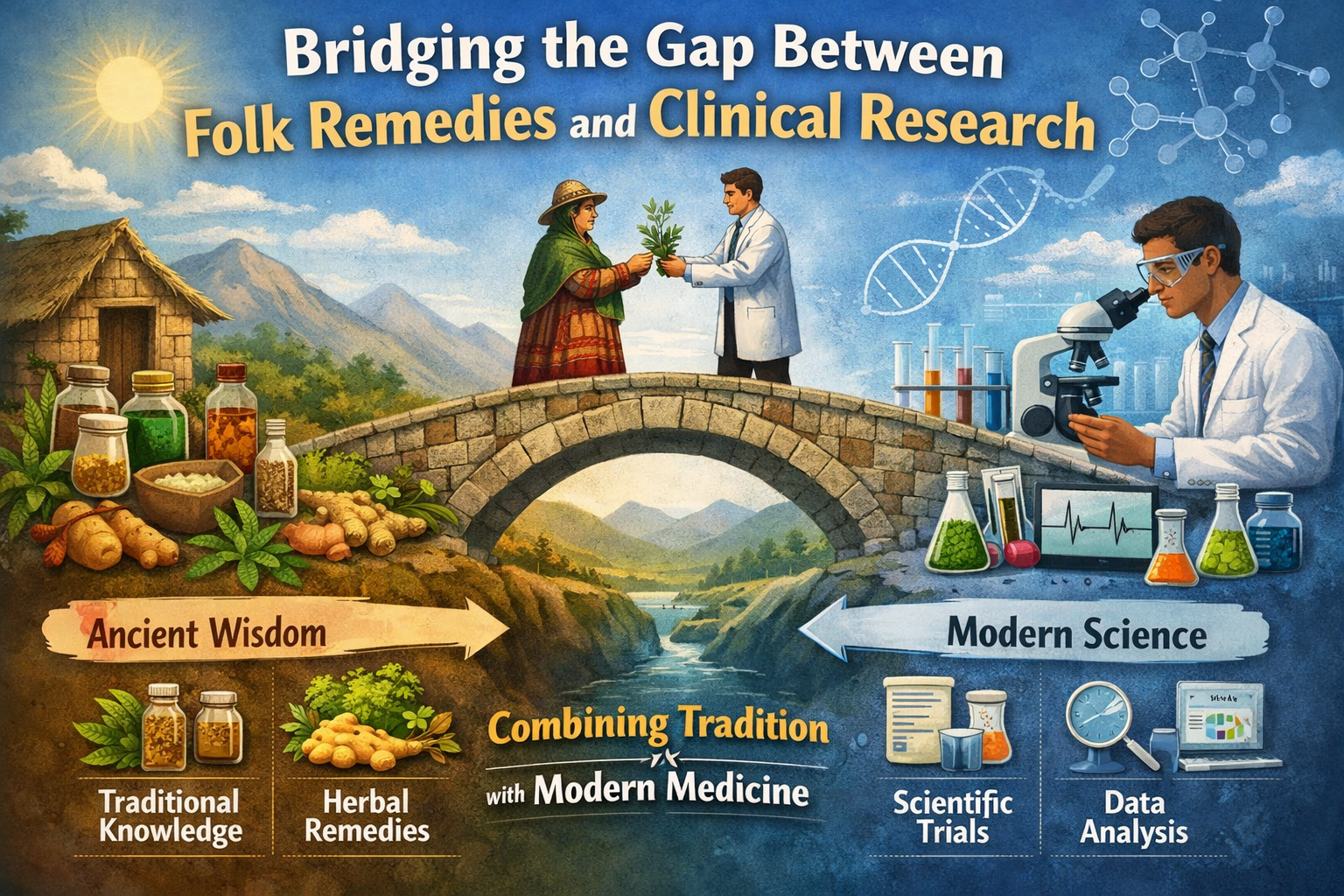
The future of healthcare isn’t choosing between traditional and scientific medicine—it’s building bridges between them.
What Traditional Medicine Offers Science
Traditional knowledge provides a discovery engine for pharmaceutical development. The bioactive compounds in plants used for centuries represent a pre-screened library of potential therapeutics. Vincristine and vinblastine, essential cancer drugs, came from the Madagascar periwinkle, a plant with traditional medicinal uses. Aspirin’s origins trace to willow bark, used for fever since ancient times.
Traditional systems also offer holistic frameworks that modern medicine increasingly recognizes as valuable. The recognition that chronic disease involves multiple systems, that patient beliefs affect outcomes, and that prevention deserves priority—these insights were central to traditional medicine long before they entered biomedical discourse.
What Science Offers Traditional Medicine
Science provides validation—the ability to distinguish effective remedies from ineffective ones. It offers standardization, ensuring that patients receive consistent, reliable preparations. It enables safety assessment, identifying toxicities and interactions before they cause harm.
Most importantly, science provides mechanistic understanding. Knowing why a remedy works allows us to optimize its use, identify the patients most likely to benefit, and combine it intelligently with other treatments.
The Integrative Approach in Practice
Genuine integration means:
- Rigorous testing of traditional remedies using appropriate methodologies
- Standardized preparations with quality control measures
- Clear communication about evidence quality, not just positive results
- Respectful collaboration between traditional healers and biomedical researchers
- Patient-centered care that honors preferences while providing accurate information
Conclusion: Beyond the False Dichotomy
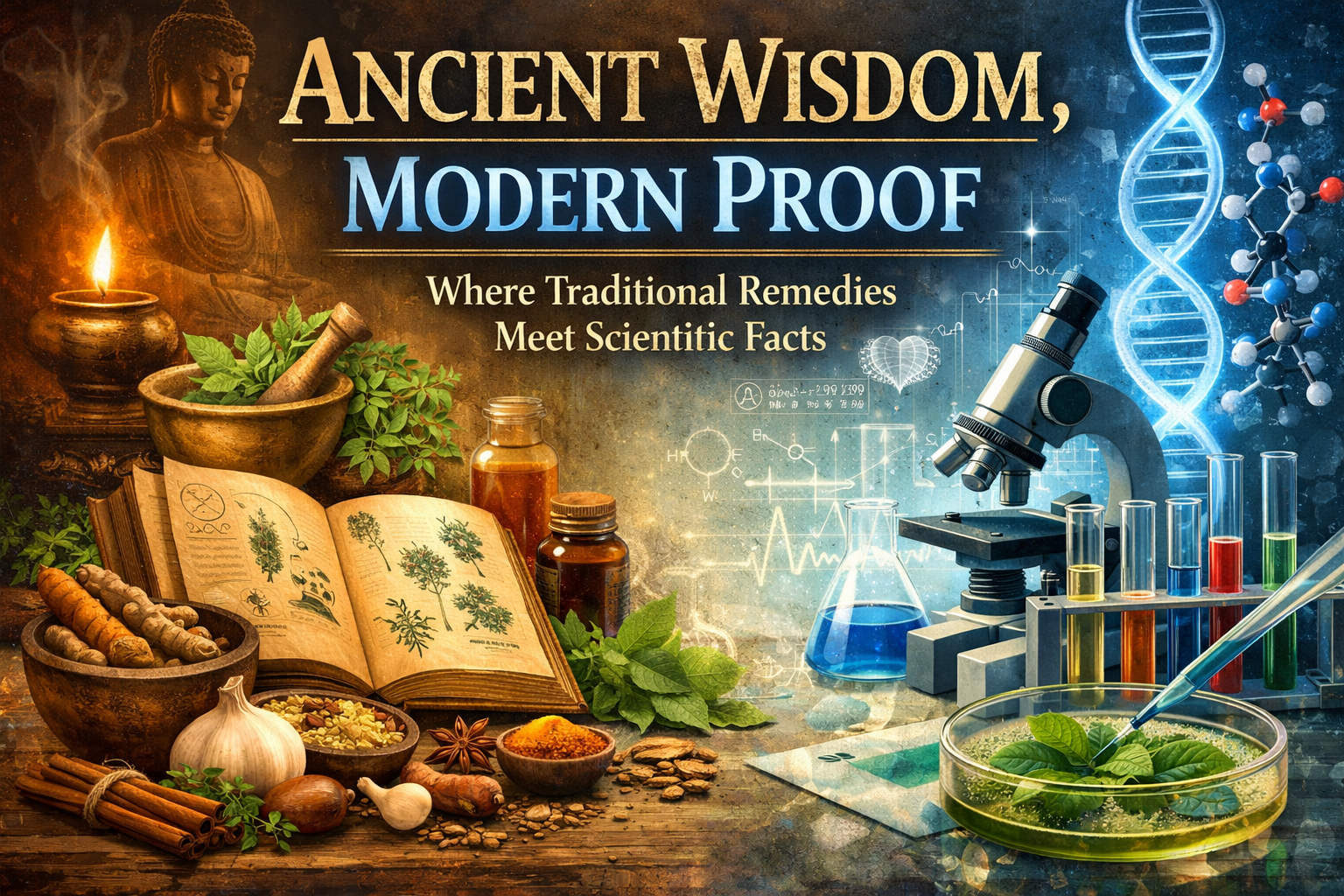
The relationship between traditional remedies and scientific facts has matured beyond the simplistic conflict narrative. We now understand that these are complementary ways of knowing, each with strengths and limitations.
Traditional medicine excels at longitudinal observation—patterns recognized across generations that would take decades for controlled trials to detect. Scientific medicine excels at causal identification—determining precisely whether and how a treatment works.
When honey outperforms conventional dressings for burns, that’s not ancient wisdom defeating modern science; it’s modern science confirming and explaining ancient wisdom. When acupuncture demonstrates cognitive benefits through neuroimaging-visible mechanisms, that’s not East defeating West; it’s integration advancing both.
The path forward requires humility from both camps. Traditionalists must accept that not every inherited practice withstands scrutiny, and that “centuries of use” doesn’t substitute for safety data. Scientists must acknowledge that their methodologies have blind spots, and that dismissing treatments because mechanisms aren’t yet understood represents intellectual arrogance.
For patients and practitioners, the message is clear: seek the best evidence, regardless of its origin. Use what works, avoid what harms, and remain open to discovery. The history of medicine is not a linear progression from superstition to science, but an expanding conversation between human experience and systematic investigation.
In that conversation, everyone has something to learn—and everyone has something to teach.
This article is for informational purposes only and does not constitute medical advice. Always consult qualified healthcare providers before starting any treatment.